Pollinator Habitats for Illinois Solar Farms
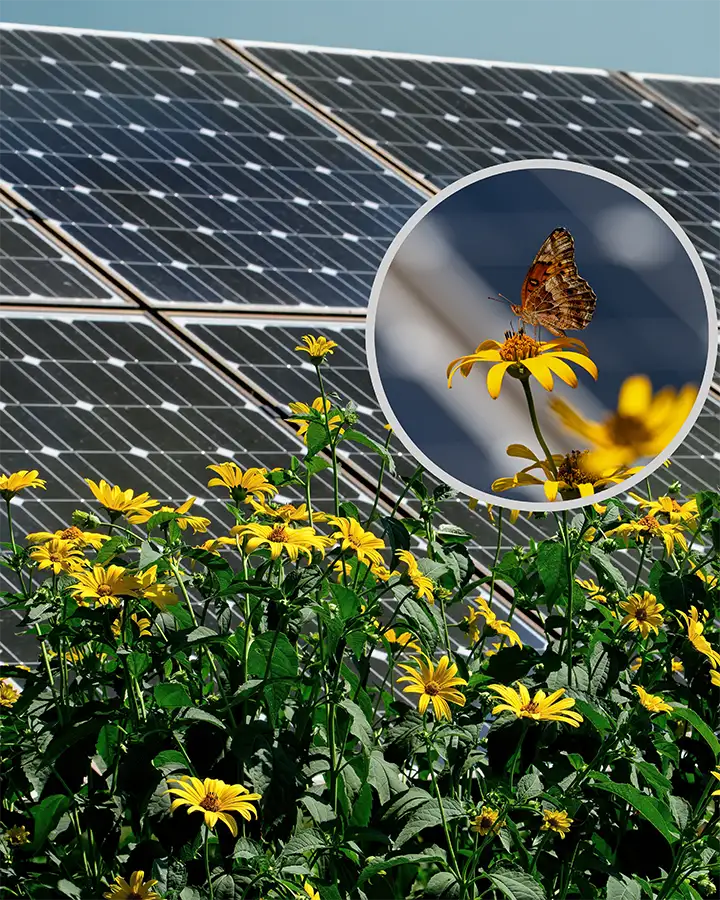
Solar farm pollinator habitats blend clean energy production with ecological stewardship by transforming solar sites into thriving ecosystems for pollinators and native wildlife. Rather than relying on traditional turf grass, pollinator solar farms are intentionally planted with native vegetation that supports bees, butterflies, birds, and beneficial insects throughout the growing season.
This approach allows solar pollinator habitats to exist beneath and around solar panels while energy is produced for decades. Pollinator-friendly solar projects help address widespread habitat loss by creating large, uninterrupted areas where native plants can establish and flourish with minimal disturbance. In addition to supporting biodiversity, these systems improve soil health, reduce erosion, and contribute to sustainable solar development goals.
As communities increasingly value environmentally responsible land use, solar farm pollinator habitats offer a solution that benefits landowners, developers, and surrounding ecosystems alike.
All Around Solar Screenings helps design and establish pollinator habitats that support biodiversity solar energy while maintaining compatibility with solar operations. Contact us today to learn how pollinator-friendly solar solutions can enhance your project from the ground up.
What Is Pollinator-Friendly Solar?
Pollinator-friendly solar refers to the intentional integration of native flowering plants and grasses within a solar farm to create long-term habitats for pollinators. These plantings are installed beneath solar panels, between panel rows, and in open areas across the project footprint, allowing vegetation to thrive while panels generate power overhead.
Unlike conventional ground cover, pollinator habitats under solar panels are designed to evolve over time, providing diverse blooms and shelter across multiple seasons. Solar arrays naturally limit soil disturbance and mowing, creating stable conditions where native plants can establish deep root systems. This stability makes solar farms an ideal environment for pollinator habitats, especially when paired with thoughtful design and management practices.
Pollinator Habitats Under Solar Panels
Solar panels create microclimates that can benefit native plants by reducing extreme heat and limiting wind exposure. Over the multi-decade lifespan of a solar project, these conditions allow pollinator habitats to mature and expand, supporting consistent pollinator populations year after year.
Contact us to explore pollinator-friendly solar designs that maximize both habitat success and solar performance.
Why Pollinator Habitats are Important
Pollinators—including bees, butterflies, birds, and other insects—play a critical role in healthy ecosystems and agricultural productivity. However, habitat loss from development and land-use changes has significantly reduced pollinator populations nationwide. Solar farms offer a scalable and impactful opportunity to reverse this trend by restoring habitats on land already dedicated to energy production. Pollinator solar farms transform underutilized ground cover into productive ecological space, supporting biodiversity solar energy initiatives that extend benefits beyond the site boundary. These habitats also strengthen food webs, improve plant diversity, and contribute to healthier surrounding landscapes.
Supporting Biodiversity Through Solar Energy
By increasing native plant diversity and creating refuge areas for pollinators, solar pollinator habitats support wildlife populations that extend into nearby agricultural and natural lands. This integration demonstrates how renewable energy development can actively enhance ecosystems rather than displace them.
Contact us today to learn how pollinator habitats can become a valuable asset to your solar project.

Environmental Benefits of Pollinator Solar Farms
Pollinator habitats on solar farms provide multiple environmental benefits that extend well beyond visual improvements. Native plants used in pollinator-friendly solar projects develop deep root systems that improve soil structure and resilience. These roots help reduce compaction caused by construction while increasing organic matter over time. Pollinator solar farms also improve stormwater management by increasing infiltration and reducing runoff compared to turf grass or gravel. Additionally, native vegetation captures and stores carbon in the soil, contributing to climate-positive outcomes alongside clean energy production.
Pollinator habitats provide multiple environmental benefits:
- Increased biodiversity and pollinator populations
- Improved soil health and reduced compaction
- Reduced erosion and improved stormwater infiltration
- Carbon sequestration through deep-rooted native plants
Together, these benefits make solar pollinator habitats a cornerstone of sustainable solar development.
Contact us to design environmentally responsible pollinator habitats tailored to your solar site.
Benefits of Pollinator-Friendly Solar Development
Pollinator-friendly solar development delivers meaningful advantages for both communities and solar project stakeholders. By replacing traditional turf with native plants, solar sites become visually appealing landscapes that reflect environmental responsibility. Reduced mowing and long-term maintenance needs help lower operational costs while improving site stability. Pollinator solar farms also create opportunities for partnerships with local farmers, beekeepers, and educational organizations, strengthening community ties. From a development standpoint, incorporating pollinator habitats demonstrates commitment to sustainability, which can support smoother approvals and long-term project viability.
Benefits for Communities and Landowners
- Enhanced visual appearance compared to turf grass
- Reduced mowing and vegetation management costs
- Support for local agriculture and beekeeping
- Educational and outreach opportunities
Benefits for Solar Projects
- Improved community acceptance
- Support for permitting and zoning approvals
- Alignment with sustainability and ESG goals
Contact us to incorporate pollinator-friendly solar strategies that benefit everyone involved.
Pollinator Habitat Establishment and Management
Successful solar pollinator habitats require careful planning during the establishment phase and thoughtful management over time. The first few years are critical, as native plants compete with weeds while developing root systems. Proper establishment practices help ensure long-term success and reduce future maintenance demands.
Establishment Period (Years 1–3)
- Targeted mowing to control weeds
- Invasive species management
- Limited chemical inputs
Long-Term Pollinator Habitat Maintenance
Once established, native vegetation typically requires less maintenance than traditional grass cover. Occasional monitoring ensures habitat health, while minimal intervention allows plants to thrive naturally.
Contact us to plan pollinator habitat management strategies that support long-term success.
Pollinator Standards and Best Practices
Many pollinator solar farms follow state pollinator scorecards or habitat guidelines to ensure consistent habitat quality and measurable ecological benefits. These standards help evaluate plant diversity, bloom duration, and habitat functionality over time. Following best practices also supports transparency and accountability, which can be valuable during permitting, reporting, and community engagement. Adhering to established guidelines ensures that solar pollinator habitats deliver meaningful environmental outcomes rather than symbolic plantings.
Contact us to implement pollinator standards that align with regulatory expectations and sustainability goals.
Pollinator Habitats vs. Solar Farm Buffer Zones
Pollinator habitats are typically located within the solar farm footprint, beneath and between panels, where it supports biodiversity and ecological function.
Solar farm buffer zones, on the other hand, are installed along the perimeter of a site and are designed to address visual screening, land-use compatibility, and separation from neighboring properties.
While both elements use vegetation, their purposes are distinct. Pollinator habitats focus on ecosystem support, while buffer zones prioritize screening and boundary protection. When thoughtfully combined, these features create well-rounded solar landscapes that meet environmental, regulatory, and community expectations.
Learn more about solar farm buffer zones or contact us today to design an integrated solar landscape solution that balances habitat, screening, and long-term performance.