

Buffer Zones for Illinois Solar Farms
Solar farm buffer zones are landscaped or managed areas established along the perimeter of a solar project to provide visual screening, environmental protection, and appropriate separation from surrounding land uses. These zones play a critical role in helping solar developments blend into their surroundings while addressing concerns from neighboring property owners and local officials.
Solar buffer zones can include a combination of vegetation, setbacks, and open space designed to soften views of panels, fencing, and equipment. In addition to aesthetics, solar farm buffer zones support stormwater control, soil stability, and long-term site safety. Many zoning requirements for solar farms specify minimum buffer widths and setbacks to ensure compatibility with nearby residences, roadways, and agricultural land.
When properly planned, solar farm setbacks and buffers enhance community acceptance and help streamline the permitting process.
All Around Solar Screenings specializes in designing and maintaining buffer zones that balance visual appeal, environmental function, and regulatory compliance. Contact us today to plan effective solar farm buffer zones that support your project’s success.
What Are Solar Farm Buffer Zones?
A solar farm buffer zone is a designated area that separates solar infrastructure from adjacent properties, public roads, waterways, or environmentally sensitive areas. These zones typically run along the outer boundaries of a solar site and may include landscaped plantings, maintained open space, or natural vegetation. Solar buffer zones are not intended to generate energy but instead serve as transitional spaces that reduce visual and physical impacts. Solar farm perimeter landscaping within buffer zones helps soften the industrial appearance of solar installations while maintaining safety and access requirements. Buffer zones also provide space for drainage, fencing setbacks, and maintenance access, which contributes to long-term operational efficiency.
The size and design of solar farm buffer zones vary depending on site conditions and solar project buffer requirements set by local authorities.
Purpose of Solar Buffer Zones
The primary purpose of solar buffer zones is to integrate solar projects into the surrounding landscape while supporting long-term project performance and zoning compliance. Buffers reduce conflicts with neighboring land uses and help solar developments coexist more comfortably with their surroundings.
Contact us to design buffer zones that meet both functional and regulatory needs.
Why Solar Farm Buffer Zones Matter
Solar farm buffer zones are a key component of responsible solar development because they address multiple concerns at once. From a community perspective, buffers reduce the visual presence of solar panels and create a sense of separation between energy infrastructure and nearby homes or roads. From an environmental standpoint, buffer zones help manage runoff, protect soil structure, and reduce erosion along site boundaries. These areas also allow developers to meet zoning requirements for solar farms while demonstrating consideration for surrounding land uses. Without adequate buffers, solar projects may face opposition, delays, or redesigns during the approval process. Well-planned solar buffer zones contribute to smoother permitting and long-term site stability, making them an investment rather than an added expense.
Visual Screening and Community Compatibility
- Reduces visibility of panels, fencing, and equipment
- Improves compatibility with nearby residences and roadways
- Enhances public acceptance of solar projects
Environmental and Land Protection
- Stormwater management
- Soil stabilization and erosion control
- Protection of wetlands, waterways, and adjacent land uses
Contact us to create buffer zones that address both community and environmental priorities.

Vegetation Used for Solar Farm Buffer Zones
Vegetation used in solar farm buffer zones is selected for durability, screening effectiveness, and safety over the life of the project. Plantings must withstand local climate conditions while maintaining clear sightlines and access for maintenance and emergency response. Solar farm screening often relies on layered vegetation that creates visual separation without interfering with fencing or infrastructure. Native and regionally appropriate species are commonly chosen because they establish strong root systems and require less long-term upkeep. Solar farm perimeter landscaping must also consider mature plant height and spread to avoid conflicts with security features or neighboring properties.
Common Solar Buffer Zone Plantings:
- Native grasses for low-level screening
- Shrubs and hedgerows for mid-height screening
- Trees for taller visual barriers where permitted
While some buffer vegetation may offer incidental benefits to pollinators, solar buffer zones are primarily designed for screening and separation rather than habitat creation.
Contact us to select buffer zone vegetation that meets functional and regulatory goals.
Solar Buffer Zone Design Considerations
Designing effective solar buffer zones requires balancing visual screening, safety, and operational needs. Buffer widths and setbacks must align with local solar project buffer requirements while fitting within the overall site layout. Designers must account for sightline safety near roadways and entrances, ensuring vegetation does not obstruct visibility. Maintenance and emergency access routes must remain clear at all times, which influences plant placement and spacing. Solar buffer zones also need to work alongside fencing, gates, and security systems without creating vulnerabilities. Long-term growth patterns are another critical consideration, as vegetation must remain effective and manageable for decades.
Key Design Factors:
- Required buffer widths and setbacks
- Sightline and safety requirements
- Maintenance and emergency access
- Compatibility with fencing and security infrastructure
Contact us to plan buffer zones that balance aesthetics, safety, and performance.
Regulatory and Zoning Requirements for Solar Buffer Zones
Solar farm buffer zone requirements vary widely by state, county, and municipality. Local zoning requirements for solar farms often specify minimum buffer widths, allowable vegetation types, and setback distances from property lines or roadways. These requirements are intended to protect neighboring land uses and ensure orderly development. Understanding and addressing these regulations early can prevent costly redesigns and approval delays.
Supporting Solar Permitting and Compliance
Properly designed solar buffer zones help meet zoning ordinances, setback requirements, and permit conditions by clearly demonstrating compliance with local standards. Detailed buffer plans can also help address concerns raised during public hearings or planning reviews.
Contact us to design buffer zones that support efficient permitting and long-term compliance.
Long-Term Maintenance of Solar Buffer Zones
Solar buffer zones require ongoing maintenance to remain effective and compliant over time. While buffer vegetation is often designed for low maintenance, periodic attention ensures safety, visibility, and visual quality are preserved. Maintenance planning should be considered early to avoid future operational challenges.
Buffer Zone Management Practices:
- Periodic mowing or trimming
- Invasive species control
- Maintaining clear access and visibility
Consistent upkeep helps buffer zones continue to meet zoning requirements and community expectations throughout the life of the solar project.
Contact us to develop a practical maintenance plan for your solar buffer zones.
Solar Buffer Zones vs. Pollinator Habitats
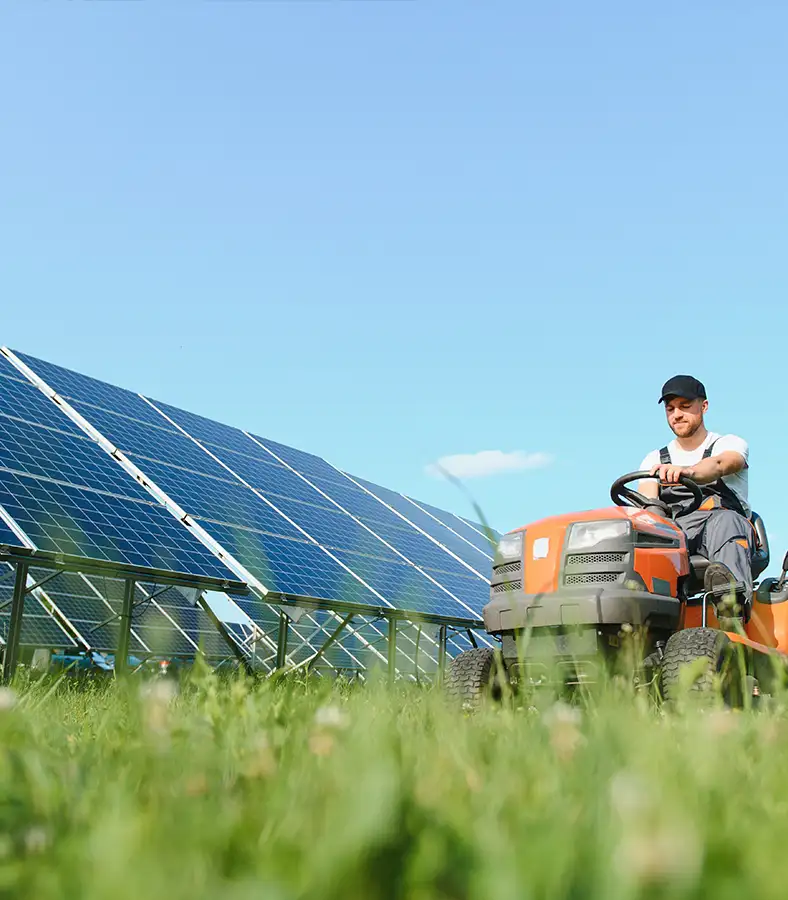
Solar buffer zones and pollinator habitats serve different purposes within a solar project. Solar buffer zones are located around the perimeter of a site and focus on screening, separation, and land-use compatibility. Pollinator habitats, by contrast, are typically established within the solar farm footprint and are designed to support biodiversity and ecosystem health.
While buffer zones may include vegetation, their primary goal is not habitat creation. Understanding this distinction helps developers allocate space appropriately and meet both visual and environmental objectives. When thoughtfully combined, buffer zones and pollinator habitats can work together to create well-rounded solar landscapes.
Learn more about solar farm pollinator habitats or contact us to plan an integrated solar landscape strategy.

Integrating Solar Farms into the Landscape
Thoughtfully designed solar farm buffer zones help renewable energy projects coexist with surrounding communities, land uses, and natural resources.
By creating transitional spaces along site boundaries, buffers reduce visual impacts and protect sensitive areas while reinforcing responsible development practices. Solar farm setbacks and buffers demonstrate that clean energy can be implemented without compromising local character or environmental integrity. When integrated early in project planning, buffer zones contribute to smoother approvals, improved public perception, and long-term site success.
Contact All Around Solar Screenings today to design solar farm buffer zones that help your project blend seamlessly into the landscape.